
More needs to be done to attract housing
February 2, 2026
By Brent Bellamy, Associate + Creative Director
Originally published in the Winnipeg Free Press
The City of Winnipeg recently celebrated that 4,993 new homes started construction in 2025. This number represents a 12.3 per cent increase over the previous year and was more than double the Canadian national average of 5.6 per cent.
This increase didn’t happen by accident. It’s the result of a concerted effort that began when Winnipeg joined the federal Housing Accelerator Fund in 2023.
Since then, the city has taken bold and sometimes controversial steps to facilitate housing construction, including streamlining zoning to allow higher-density development in existing neighbourhoods, identifying surplus public land for affordable housing and creating financial incentives and concierge services for high-impact projects.
Most importantly, housing has become a day-to-day priority in approvals and decision-making.
By prioritizing new housing to meet the demand of population growth, Winnipeg can remain an affordable, thriving city — one that attracts young families, enables homeownership and creates opportunities for people to build prosperous lives.
Expanding housing diversity with apartments, townhouses and secondary suites ensures that our city meets the needs of evolving household demographics. Expansion allows seniors to age in place and makes high-quality neighbourhoods accessible for people from all backgrounds, fostering a more inclusive, vibrant and resilient community.
Increasing residential density is one of the most effective ways to strengthen our city. It attracts investment into existing neighbourhoods, making them more vibrant, walkable and livable, while ensuring there are enough residents to sustain local businesses and shared amenities, like libraries and community centres. Compact development also uses public dollars more responsibly, spreading the cost of roads, emergency services and snow clearing across more taxpayers and accommodating growth without expensive new infrastructure.
By supporting transit and active transportation, higher densities reduce traffic congestion, lower greenhouse gas emissions and help build a more affordable and sustainable city.
Winnipeg’s housing growth puts it on a strong path for the future, but we must always stay focused on continued improvement.
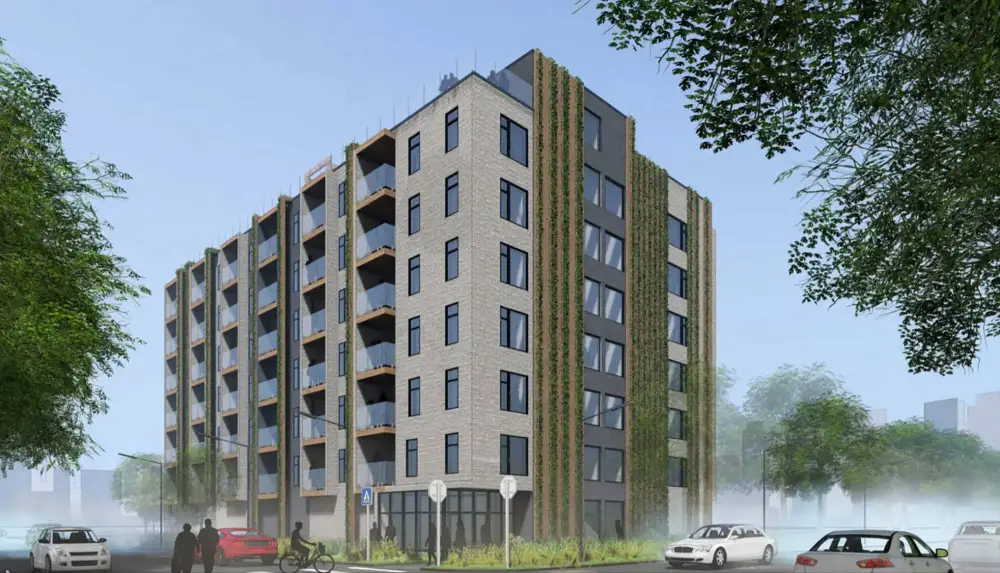
A proposed development on a vacant property at 36 Roslyn Rd. in Osborne Village offers an opportunity to reassess policies that may still hinder good development.
The project was given approval late last week, but it required the developers to reduce its size to more closely align with two significant zoning restrictions. The first of these constraints was parking. Initially an eight-storey building with 72 rental apartments, it planned for only 21 parking stalls, well short of the minimum requirement. The only way to add more parking was to build a prohibitively expensive underground structure. With fewer residential units in the smaller proposal, it will now come closer to the required parking ratio, but it results in a loss of valuable new homes for people in the neighbourhood. This minimum parking requirement in our zoning policy prioritizes homes for cars over homes for people.
The high cost and significant space required to accommodate vehicles is why cities across Canada and North America are eliminating government mandated parking requirements that stifle development and push growth to suburban areas where inexpensive surface parking lots can be built.
When the market, rather than government, decides how much parking is appropriate to make projects both economically viable and leasable to tenants, developers can be more targeted and flexible to find that balance.
Parking is always a contentious issue with local residents who wrongly believe that they own adjacent public street parking, but prioritizing cars over homes should stand against our collective social values.
If we want to continue growing our housing construction momentum, we might follow cities like Edmonton, Vancouver, Toronto, Montreal and Ottawa, which have eliminated minimum parking requirements in their zoning bylaws.
The second policy hurdle identified at the 36 Roslyn Rd. project was that it proposed significantly more housing units on the property than current zoning permits. Instead of being able to negotiate with the city to emphasize the value of adding new homes to the neighbourhood, the project was put into the Winnipeg Residential Density Bonus Pilot Program. This program incorporates inclusionary zoning, which grants concessions such as increased density in exchange for a contribution to the public good. In this case, 50 per cent of the units built above the allowable density were to be offered at affordable rent for 20 years.
Creating affordable housing is clearly a priority for our community. However, in a slower-growth, lower-income market like Winnipeg, this requirement can place significant strain on the financial viability of housing projects. Inclusionary zoning has proven more successful in high-growth, high-return cities such as Montreal and Vancouver, where it’s typically paired with financial incentives that help offset the cost of providing affordable units.
There is a common perception that housing development is a high-margin investment capable of absorbing added costs, but this is generally not the case. Since 2020, residential construction costs have increased by approximately 50 per cent, while rents have risen by 25 per cent, making the viability of new housing projects increasingly tenuous. This imbalance is occurring across Canada, and municipalities in Ontario and British Columbia are now considering pausing their inclusionary zoning policies to ensure that new housing development remains feasible.
Much of what has bridged this economic gap, and driven multi-family residential development in Canada, has been federal financing programs administered by the Canada Mortgage and Housing Corp. As much as two-thirds of new multi-family housing across the country is supported by these programs, which typically require at least 10 per cent of units to be affordable. This raises the possibility of stepping back from inclusionary zoning requirements, treating additional density itself as the public benefit and allowing CMHC programs to advance our affordability objectives.
The success of Winnipeg’s housing delivery should be celebrated. At the same time, we must continue to refine our policies to ensure they remain progressive, responsive and calibrated to sustain the impressive momentum we have achieved.
Written By